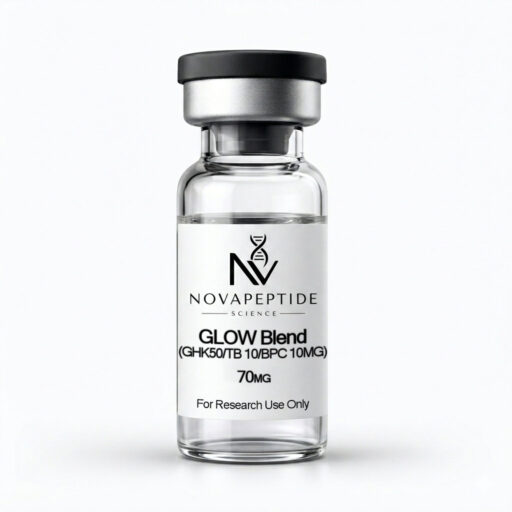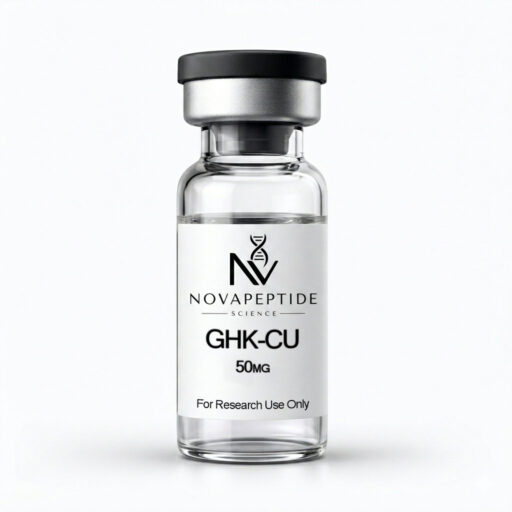
For decades, structural proteins like collagen and elastin have dominated the discourse surrounding extracellular matrix (ECM) integrity and tissue repair. However, research into signal peptides has revealed more complex regulatory mechanisms that govern how biological structures repair and rebuild themselves at a cellular level.
Among these signal molecules, GHK-Cu (Glycyl-L-histidyl-L-lysine copper complex), a naturally occurring tripeptide first isolated in 1973 by Dr. Loren Pickart, has attracted substantial attention within molecular biology and regenerative biochemistry. Unlike conventional collagen molecules, which function primarily as structural scaffolding, GHK-Cu operates as a biological response modifier. It coordinates tissue repair pathways through copper chelation, gene regulation, and matrix metalloproteinase balancing.
The Chemistry of GHK-Cu: Structure & Copper Chelation
GHK-Cu is composed of three amino acids: glycine, histidine, and lysine, bonded tightly with a copper divalent ion
The presence of the histidine residue provides a high-affinity binding site for copper(II). In biological systems, copper is an essential trace element required as a cofactor for key enzymatic processes, including:
Lysyl Oxidase (LOX): An essential enzyme involved in cross-linking collagen and elastin fibers, providing structural stability to extracellular matrices.
Superoxide Dismutase (SOD): A potent endogenous antioxidant enzyme that neutralizes reactive oxygen species (ROS) to protect tissue structures during oxidative stress.
By binding and regulating the bio-availability of local copper ions, the GHK tripeptide delivers copper precisely to microenvironments requiring enzymatic activity without causing cellular toxicity.
Mechanisms of Action: How GHK-Cu Regulates Cellular Repair
Research demonstrates that GHK-Cu modulates the activity of fibroblasts—the primary cells responsible for generating ECM components. Studies show GHK-Cu stimulates the expression of:
Type I and Type III Collagen: Enhancing structural density and cross-linking efficiency.
Elastin & Glycosaminoglycans (GAGs): Supporting structural elasticity and hydration matrix integrity (including decorin and hyaluronic acid).
Matrix Metalloproteinase (MMP) Modulation
Effective tissue repair requires both the synthesis of new matrix proteins and the systematic degradation of damaged tissue. GHK-Cu maintains this biological equilibrium by regulating:
Matrix Metalloproteinases (MMPs): Enzymes that break down damaged ECM proteins.
Tissue Inhibitors of Metalloproteinases (TIMPs): Endogenous proteins that prevent excessive tissue breakdown.
By balancing MMPs and TIMPs, GHK-Cu supports controlled matrix turnover, preventing hypertrophic scarring or improper tissue remodeling.
Gene Expression & Anti-Inflammatory Signaling
Genome-wide expression profiling shows GHK-Cu regulates hundreds of genes involved in cell cycle regulation, antioxidant defense, and anti-inflammatory signaling. It suppresses pro-inflammatory cytokines such as TNF-alpha and IL-6, creating an optimal environment for cellular repair.
GHK-Cu represents a significant shift from static structural repair to dynamic signal modulation in regenerative science. By acting as a targeted copper transporter and gene expression regulator, this tripeptide remains a cornerstone of current cellular repair and tissue matrix studies.As researchers continue to evaluate peptide dynamics, understanding the precise pathways through which GHK-Cu operates provides valuable insights into cellular remodeling and structural integrity.